
The scientists behind the constants
Many constants carry the name of the person who first understood the effect they measure, though few of them measured the number themselves.
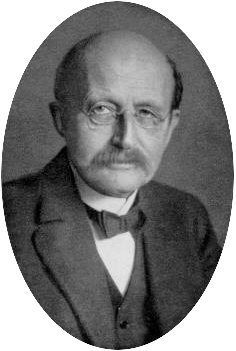

Max Planck
Introduced the quantum of action h in 1900 to explain black-body radiation, and in 1899 proposed the natural units now named after him.
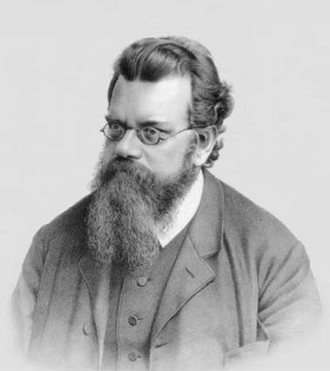

Ludwig Boltzmann
Founded statistical mechanics, linking the entropy of a system to the number of ways its particles can be arranged; Planck first wrote the constant k down and named it after him.
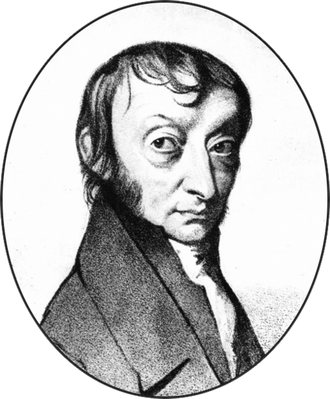

Amedeo Avogadro
Proposed in 1811 that equal volumes of gases at the same temperature and pressure contain equal numbers of molecules; the number was measured long after his death.
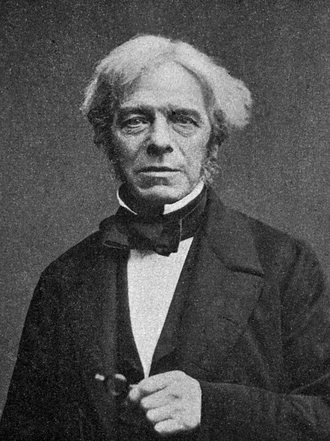

Michael Faraday
Discovered the laws of electrolysis (1833–34): the charge needed to deposit a mole of a substance is fixed, which is what the Faraday constant expresses.
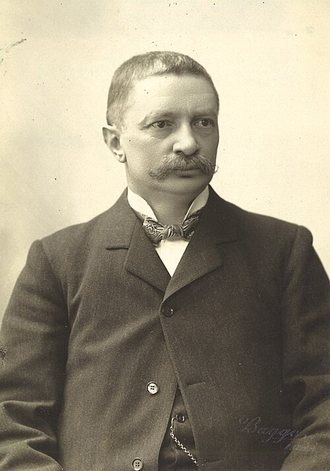

Johannes Rydberg
Found in 1888 the formula that gives the wavelengths of the spectral lines of hydrogen and other elements from one constant.
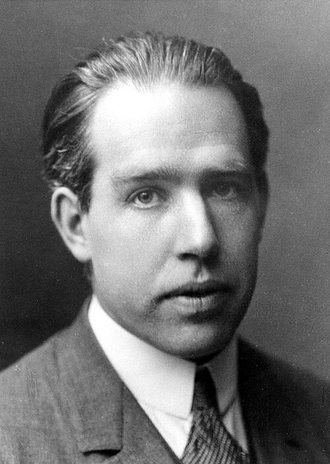

Niels Bohr
His 1913 model of the hydrogen atom explained the Rydberg formula with quantised electron orbits; the size of the smallest orbit is the Bohr radius.
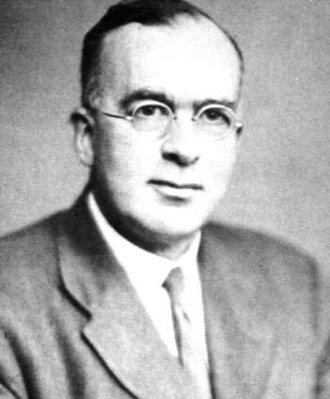

Douglas Hartree
Developed the self-consistent-field method for many-electron atoms and the system of atomic units in which the Hartree energy is the unit of energy.
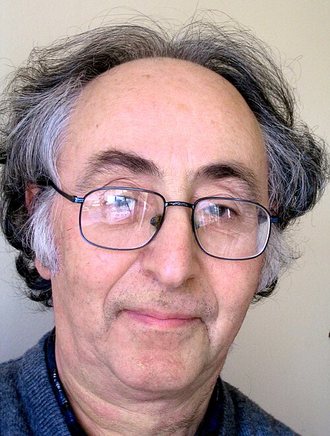

Brian Josephson
Predicted in 1962, as a graduate student, the tunnelling supercurrent between superconductors now called the Josephson effect (Nobel Prize 1973).
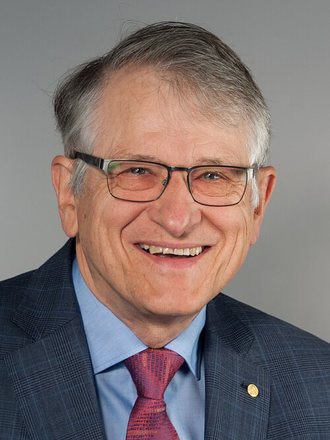

Klaus von Klitzing
Discovered the quantum Hall effect in 1980: a resistance quantised in units of h/e², independent of the material (Nobel Prize 1985).
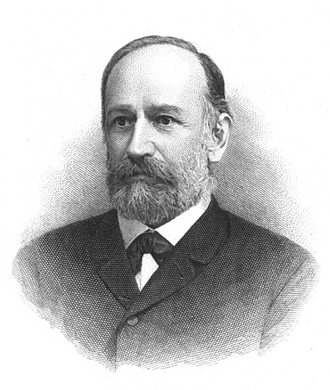

Josef Stefan
Found from measurements in 1879 that the total radiation from a hot body grows as the fourth power of its temperature; Boltzmann derived the law in 1884.
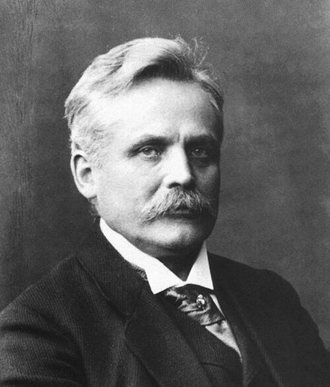

Wilhelm Wien
Showed in 1893 that the peak of black-body radiation shifts to shorter wavelengths as temperature rises (Nobel Prize 1911).
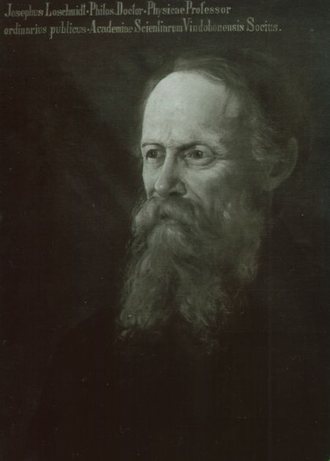

Johann Josef Loschmidt
Made the first good estimate of the size of air molecules in 1865, from which the number of molecules in a volume of gas follows.
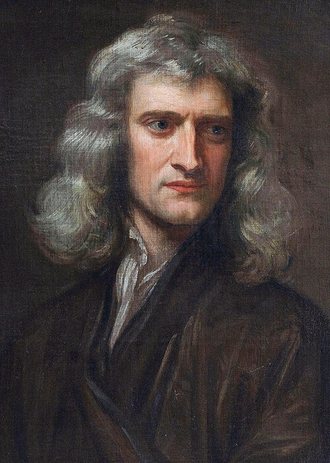

Isaac Newton
His law of universal gravitation (1687) contains the constant G, though it was not measured until Cavendish's torsion-balance experiment of 1798.
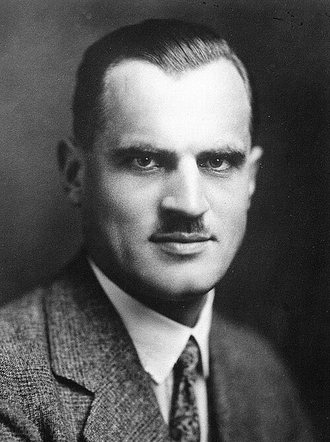

Arthur Compton
Showed in 1923 that X-rays scattered by electrons change wavelength as if they were particles, by an amount set by h/(mc) (Nobel Prize 1927).
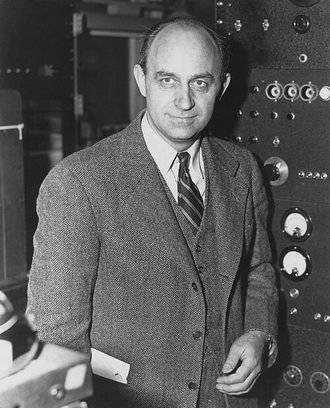

Enrico Fermi
Wrote the first theory of beta decay (1933–34); its coupling constant sets the strength of the weak interaction.
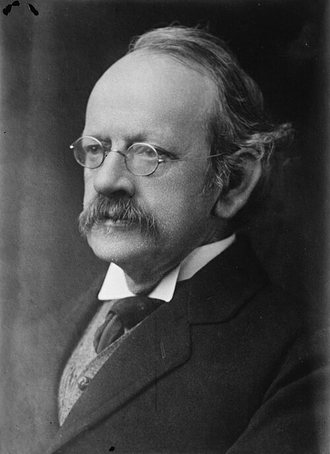

J. J. Thomson
Discovered the electron in 1897 and calculated how strongly a free electron scatters electromagnetic radiation (Nobel Prize 1906).
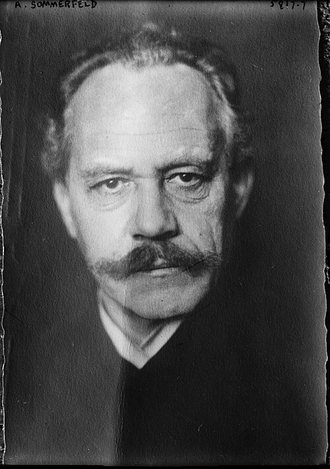

Arnold Sommerfeld
Introduced the fine-structure constant in 1916 to explain the fine splitting of hydrogen's spectral lines; it is not named after him, but it is his.